 By Allen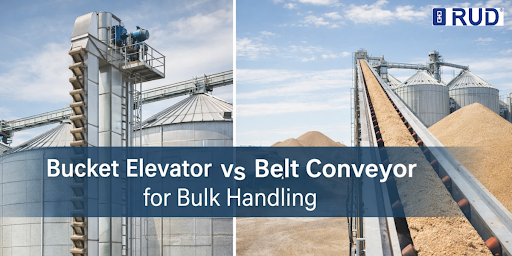
Wondering which bulk handling system suits your facility better? We understand that choosing between a bucket elevator and a belt conveyor for your bulk handling operation isn’t straightforward. The wrong system costs you in wasted floor space, higher maintenance bills, and material damage during transport.
Here’s the thing: bucket elevators lift materials vertically using chain-driven buckets, while belt conveyors move loads horizontally or at angles. Each system handles different materials, operates under different conditions, and fits different facility layouts.
At RUD Australia, we’ve worked with both systems across mining, grain handling, and industrial operations throughout Brisbane and beyond. So we know what works in real applications and can share practical guidance with you.
In this article, we’ll cover:
- How bucket elevators and belt conveyors actually work
- Design differences that affect your operation
- Which materials suit each system best
- Maintenance and cleaning requirements you need to plan for
Let’s break down which system fits your bulk handling needs.
How Do Bucket Elevators and Belt Conveyors Work?
Put simply, bucket elevators lift straight up while belt conveyors carry loads across or at an angle. The design and construction of each system determine what it handles best and where it fits in your facility.
So here’s how each one operates:
Bucket Elevator Design and Operation
How does a bucket elevator lift tonnes of material vertically without spilling or damaging it? Well, a chain and sprocket drive holds a series of steel buckets. These buckets remain upright throughout the entire circuit, collecting material at the boot (the bottom section) and discharging at the top.
The chain-driven mechanism pulls buckets up at a consistent speed, usually between 100 and 300 feet per minute, depending on capacity requirements. Because the buckets stay level, the elevator can handle free-flowing materials without spillage. This vertical design means the system occupies minimal floor space while reaching significant heights.
Belt Conveyor Systems Explained
Belt conveyors use a simple motorised belt system to move materials horizontally or at angles. Here’s how it works: powered pulleys drive a continuous belt loop, and the material sits directly on the belt surface as it travels. However, you’ll need to keep an eye on belt tension and alignment to maintain smooth operation.
The belt itself can be flat for basic loads or include cleats and sidewalls for inclined transport. This flexibility lets you configure the conveyor for straight runs, curves, or gentle inclines up to about 30 degrees.
In terms of build, construction varies from light-duty conveyors for small operations to heavy-duty systems handling bulk grain or minerals across long distances. So no matter what you’re moving, there’s probably a belt configuration that’ll handle it.
Bucket Elevator vs Belt Conveyor: What Sets Them Apart
Movement direction, design mechanism, and footprint are the three main factors that set these systems apart. The differences affect everything from how much floor space you need to what materials you can handle safely.
The table below breaks it down:
| Factor | Bucket Elevator | Belt Conveyor |
| Movement | Vertical (90 degrees) | Horizontal or angled |
| Drive System | Chain and sprocket | Belt and pulley |
| Material Handling | Individual buckets | Continuous belt surface |
| Maximum Width | Up to 48 inches is typical | Up to 72 inches or more |
| Operating Speed | 100-300 feet per minute | Varies widely by design |
| Footprint | Minimal horizontal space | Requires length for run |
| Height Capacity | Can reach 100+ feet | Limited by angle and length |
These design differences create real operational trade-offs. Bucket elevators save you floor space by going straight up, which is important in compact facilities. The vertical range lets you move materials between different floor levels without long conveyor runs, eating up your workspace.
Meanwhile, belt conveyors give you more flexibility in layout since they can curve, incline, or run horizontally across your operation. But that adaptability comes at the cost of more floor space. The wider belt capacity means you can handle bulkier items or larger volumes in a single pass, but you’ll need the room to accommodate the conveyor’s full length.
Bottom Line: Choose a bucket elevator if you’re tight on floor space and need to move materials straight up. But if you need flexibility in routing or want to handle oversized loads, then go for a belt conveyor.
Now that you understand the structural differences, the next question becomes which materials work in each system.
Material Types: What Works Best in Each System?
Dry bulk materials suit bucket elevators, while sticky or fragile products work better on belt conveyors. Think about it this way: the way your material behaves during transport determines which system prevents damage and keeps your operation running smoothly.
Consider these material categories to decide which system suits you:
- Free-Flowing Bulk Materials: Dry, free-flowing materials like grain, sand, and aggregates move through bucket elevators without sticking. The gentle handling keeps material integrity intact during vertical transport. Because of this, mining operations use them for coal, minerals, and ore that need lifting between processing levels.
- Irregular or Oversized Loads: When you have metal components, scrap materials, or demolition waste with varying sizes, belt conveyors handle the variety better than fixed bucket dimensions. They adapt to different load shapes without requiring uniform sizing. Also, heavy bulk loads that exceed bucket capacity limits can spread across wider belt surfaces instead of jamming in enclosed spaces.
Material fragility and moisture content decide which system prevents product damage during transport. The wrong choice leads to clogged buckets or material spillage that costs you in cleanup time and wasted product.
Maintenance and Cleaning Requirements
Cleaning and maintenance schedules can make or break your operating costs over time. At the end of the day, the system that’s easier to service saves you money on labour and downtime.
Let’s break down the cleaning challenges each one presents:
Why Belt Conveyors Are Easier to Clean
Belt conveyors have fewer parts and simpler surfaces, which means faster cleaning and less downtime. The open frame design gives your crew better access to the belt surface, and there aren’t many places for material buildup to hide.
Trust us, the smooth belt surfaces wipe down quickly compared to enclosed systems. You can spot wear, tears, or tracking issues during routine inspections without disassembling components.
Worth Noting: You need less training for maintenance staff since the mechanical system is straightforward. This cuts your labour costs and keeps the conveyor running with minimal intervention.
Bucket Elevator Maintenance Considerations
On the other hand, bucket elevators need a different maintenance approach to keep running reliably. Their chain systems require scheduled lubrication to prevent wear on sprockets and bucket attachments. The steel buckets themselves can trap residual material in corners, which means more thorough cleaning procedures between product runs.
While some bucket elevator models offer clean-in-place capabilities, most still need more hands-on maintenance than belt systems. Beyond that, accessories like tensioners, sprockets, and drive components require regular checks to maintain reliability.
The enclosed construction makes it harder to spot problems until they affect performance, which is why scheduled inspections are more important with bucket elevators.
When to Choose a Bucket Elevator for Your Operation
As we already mentioned, when you’re short on floor space and moving high volumes of dry bulk materials, you should choose a bucket elevator. Basically, three situations make bucket elevators the better choice for industrial operations.
- Limited Horizontal Space: Mining sites in the Port of Brisbane and industrial operations across Ipswich face this challenge regularly. When you can’t spare 50 or 100 feet for a conveyor run, a bucket elevator goes straight up and saves that floor space for other equipment or processes.
- High-Capacity Requirements: An 18-inch bucket elevator can move up to 0.525 cubic feet per cycle, while a similar-width belt conveyor at 90 degrees handles only 0.2 cubic feet. That throughput difference means more material moved in less time for grain handling facilities or mining operations processing tonnes per hour.
- Height Requirements: Consider vertical distance when you need to elevate materials 50, 75, or 100+ feet between processing levels. The vertical design lets bucket elevators reach these heights without the long inclined runs that belt conveyors would need. This becomes important in multi-level facilities where floor space on each level is already tight.
While speed and capacity determine production rates, your available space decides which system fits.
Get the Right Bulk Handling System for Your Facility
Choosing between a bucket elevator and a belt conveyor comes down to your facility layout, material type, and capacity needs. Both systems have their place in bulk handling operations across Australia.
The right system saves you money on maintenance, prevents material damage, and fits the space you actually have available. When you match your operation’s requirements to the system’s design strengths, you achieve reliable transport that doesn’t cost you in downtime or wasted materials.
RUD Australia supplies chain systems and lifting accessories for both bucket elevators and belt conveyors. Our range of Grade 120 chains and lifting components keeps your bulk handling equipment running reliably.
Contact us to discuss which system makes sense for your operation.